Postcards from Erasmus: stories that shaped the sector
It was August 2000 when Chloé Gorlei found herself at Nijmegen train station in the Netherlands, standing in the hot summer air and waiting for a minibus that would carry her to the international office at the University of Radboud.
“There, I would sign the necessary paperwork and collect my bedroom pack; two towels, some bedding, and a single, unremarkable tea towel that somehow made the whole adventure feel suddenly real.”
Gorlei, now head of international partnerships and student recruitment at Escape Studios, was the the first in her family to go to university, and had recently completed a two-year diploma in business and marketing and the University of Montpellier II in France.
She describes her level of English at the time as “basic”, she didn’t know anyone in the country and was without a mobile phone. Despite these challenges, this was the start of a new chapter for her.
“Not only did I meet people from all over the world, and learnt about new cultures, accents and habits, but I also lived in an unfamiliar place that would become home for ten months. Although culturally close to my country, I had to learn new codes, and even a new language.”
“The university itself was very different to what I had known so far: going through economics books in English was a challenge! I was also not used to only having a few hours of lectures a week. Where I came from, we had lectures all day, five days a week,” she recalled.
“This is Erasmus to me: experiences that shaped my future and friendships for life. It’s not all rosy, there are challenges, but it gives everyone, regardless of background or financial situation, a glimpse of what it means to be an international student. It opens your eyes to a world you might never have discovered otherwise,” said Gorlei.
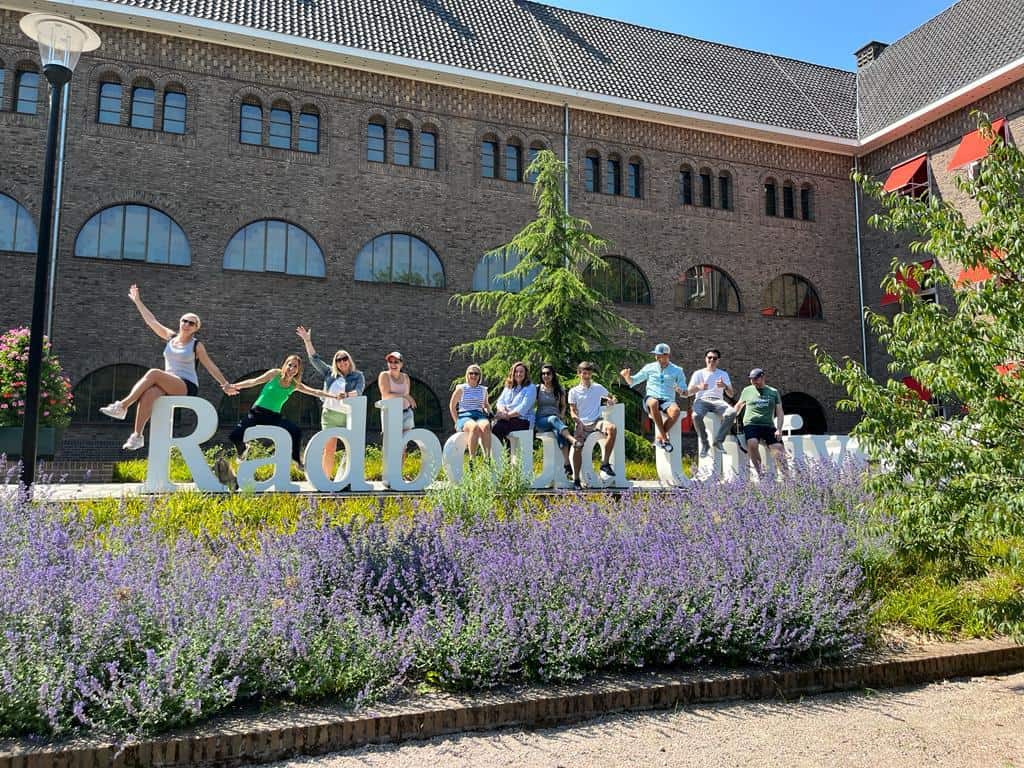
In 2023, Gorlei reunited with some of her fellow Erasmus students in the Netherlands, describing it as “a wonderful chance to relive those moments, cycle the same lanes, and party in the same bars”.
“It fills me with joy and hope that UK students will finally have this chance again, and that European students will discover the UK, an opportunity they might otherwise never have.”
For Maria de la Pisa, deputy director international and head of international partnerships and relations at the University of Bristol, the UK’s reassociation to Erasmus+ is the early Christmas present she was hoping for.
“I am incredibly excited to hear that the UK is going to rejoin the Erasmus+ program from 2027. This is wonderful news for the UK higher education sector and for all the thousands of UK and EU students who will be able to benefit from this transformative opportunity.”
De la Pisa is proud to call herself an Erasmus scholar, having spent a year at the Univerity of Leicester, studying in a second language and quickly adapting to a very different academic approach compared to what she was used to in Spain.
“I embraced British culture wholeheartedly,” she said.
“That year was full of making international friends, travelling to as many corners of the UK as my budget allowed, and embracing the unexpected. I discovered fascinating traditions and celebrations which I had never even heard of before. It was a year of growth, adventure, and unforgettable experiences.”
And it was that during this year that de la Pisa met her husband, who later went on to participate in an Erasmus exchange in Spain. The couple celebrated their 20th wedding anniversary in 2025.
The pair returned to the University of Leicester, 27 years later, to show their children where they first met – at an international student party in the Students’ Union (Percy Gee Building).

As de la Pisa’s son prepares to enter university next year, she said she is “delighted” that this opportunity will also be available to him and many other UK students.
“Professionally, this incredible opportunity sparked an interest in working in international education and I have spent over two decades in the higher education sector motivated by a commitment to extend the same transformative opportunities I had to others.
“For the sector, this is a huge win. It will strengthen collaboration with European partners, not only through student mobility but also through research, education, and cultural exchange. I hope this renewal also inspires a wider interest in language learning and the arts, areas that enrich society and reinforce global connections,” said de la Pisa.
“Here’s to the next generation discovering the world, building friendships across borders, and shaping their futures. A big thank you to Universities UK International and all those who have tirelessly advocated for this change.”
For Anne Marie Graham, chief executive of UKCISA, it is no exaggeration to say that Erasmus changed her life – both personally and professionally. Speaking to The PIE, she reflected on the transformative impact of the program and expressed her delight that young people in the UK will once again have access to the same life-shaping opportunities through Erasmus.
“I didn’t know it at the time but I would have been a Widening Participation student. I was lucky enough to be funded for two Erasmus semesters – one in Granada, Spain and another in Clermont-Ferrand, France,” she told The PIE. She recalled her time in Granada with particular fondness, remembering it as it was before it became the global tourist destination it is today.
“It was free to enter the Alhambra and I just used to go up on a Sunday afternoon with my book to sit and recover after a fun Saturday night out!”

“It was daunting at first, but loved being able to study alongside Spanish and French students, and create links with locals through university projects,” said Graham.
“I was lucky to be able to immerse myself in many ways in Spain, and it was life-changing. It gave me self-confidence, language skills, intercultural competence and of course friends for life with students from other Uk universities, Spain, Italy, Sweden and the US. I’m very happy that these opportunities are returning to UK students.”
The PIE‘s own Jacqui Jenkins also took a moment to reflect on her experience as an Erasmus student at weißensee academy of art berlin (then widely known as the East Berlin Art College).
“Erasmus was genuinely life-changing for me – and, in many ways, probably the reason I’m still addicted to working in this wonderfully chaotic international education sector,” said Jenkins.
I left the UK in 1997 as a Brit. I came back thinking much more like a global citizen
Jacqui Jenkins, The PIE
“Being dropped into a classroom with students from entirely different backgrounds changes how you see the world. Many of my peers had grown up in the former East Germany or the wider USSR and had experienced a very different schooling system and social reality. Those conversations – and that context – forced me to see everything through a different lens.
“I left the UK in 1997 as a Brit. I came back thinking much more like a global citizen.”
The post Postcards from Erasmus: stories that shaped the sector appeared first on The PIE News.