How Univive is transforming what a recruitment service partner should look like
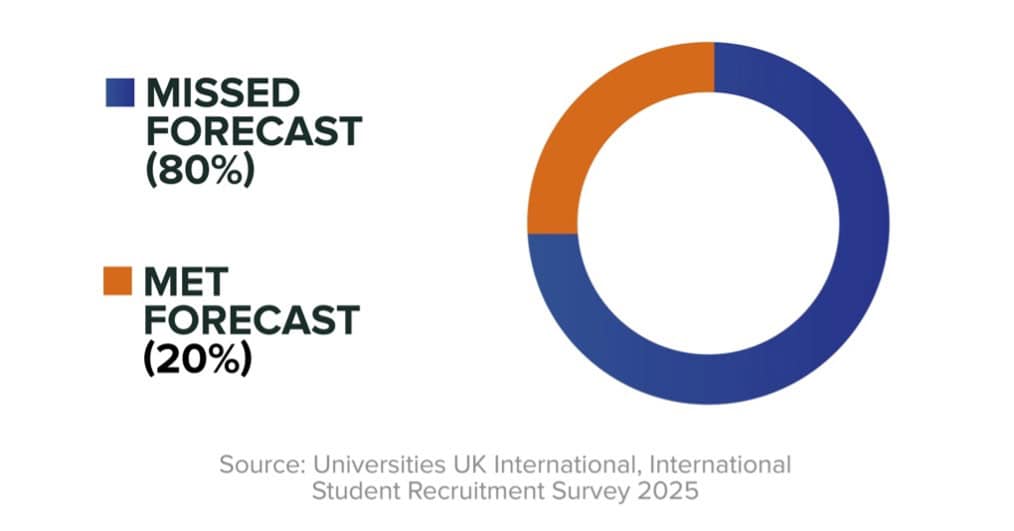
According to Universities UK International, nearly 80% of UK universities did not meet their September 2024/5 international recruitment expectations. That figure alone suggests the challenge goes beyond temporary market conditions.
At its core, international recruitment relies on three stakeholders: universities, agents and students. When one part of that chain is under-supported, the entire system feels the strain.
Universities continue to invest significantly in global marketing and brand presence. Interest is generated. Enquiries come through. But consistent in-market follow-up and regional intelligence are not always embedded deeply enough. Agents are then expected to convert that interest into enrolments, often without clear, real-time support or structured engagement.
Students receive offers, but the period between offer and arrival, arguably the most fragile stage of the journey, is frequently left under-managed. The result is not a lack of demand. It is a lack of alignment, and demand does still exist.
Growth at that scale does not happen by chance. It reflects institutions and partners who were already present in-market, building relationships long before demand accelerated.
Similar patterns are emerging across parts of Southeast Asia, West Africa and Central Asia. Students are there. Interest is there. The differentiator is whether sustained support is there too.
This is the thinking behind Univive, part of the Planet Education Networks (PEN) group. Operating across multiple high-growth regions, the organisation’s approach centres on strengthening the full recruitment chain rather than focusing on a single link.
The UK government’s international education strategy targets £40 billion in education exports by 2030. Achieving that ambition will require coordination across institutions, agents and students – not isolated effort
That means working closely with universities on in-market positioning, treating agents as long-term partners rather than transactional channels, and maintaining engagement with students beyond offer stage. It is not a dramatic model. It is operational and relationship-led.
The wider policy backdrop adds urgency. The UK government’s international education strategy targets £40 billion in education exports by 2030. Achieving that ambition will require coordination across institutions, agents and students – not isolated effort.

International recruitment is unlikely to become less competitive but the institutions that adapt structurally, not just tactically, may find themselves better placed to navigate the next cycle.
The sector does not need more commentary on what is going wrong. It needs partners who show up, do the work, and stay in it for the long run. That is what Univive is built for. Not more noise. Just better support.

Author: Siddiq Rahman leads international recruitment, partnerships, and market expansion at Univive. With over a decade of executive experience, he has shaped institutional growth and global networks. Known for his vision and leadership, he drives innovation across the international education sector. His work continues to influence policy, practice, and strategic direction.
The post How Univive is transforming what a recruitment service partner should look like appeared first on The PIE News.